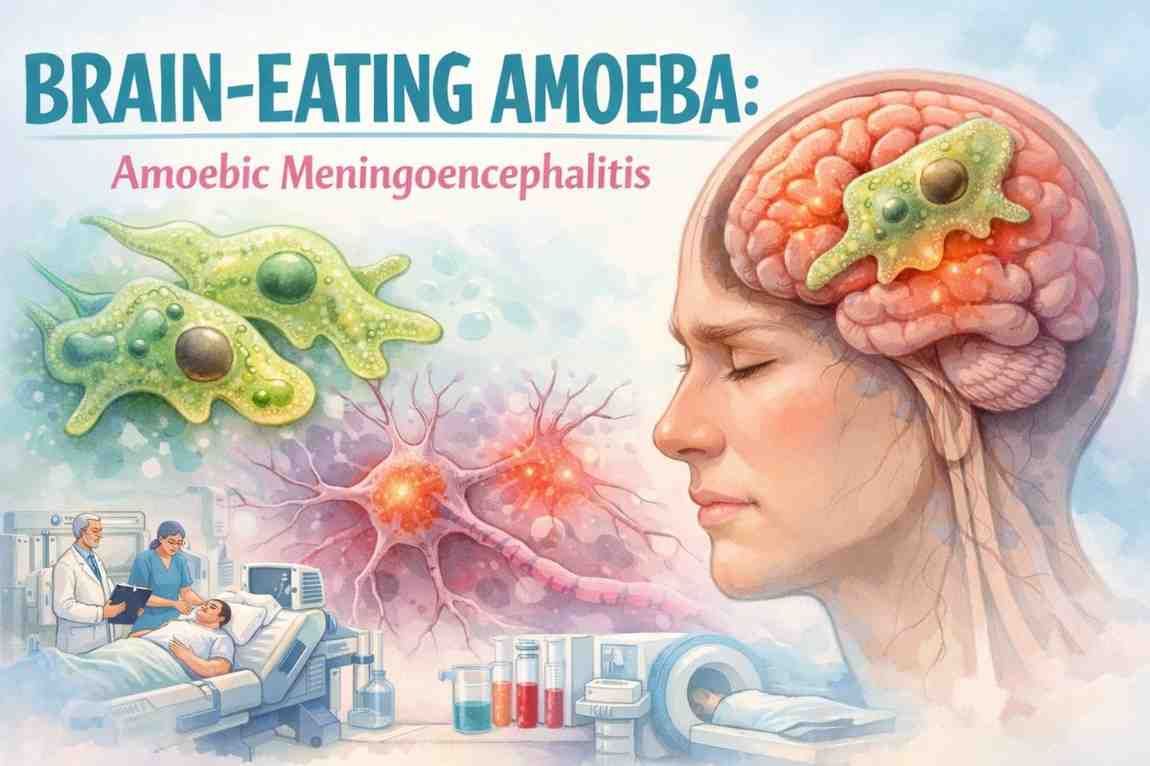
Primary Amebic Meningoencephalitis (PAM)
“The Silent Killer in Warm Water: What Everyone Must Know About Amoebic Meningitis”
Primary Amoebic Meningoencephalitis (PAM),
often simply called Amoebic Meningitis, is a rare but devastating infection
caused by an amoeba (specifically Naegleria fowleri) that enters the body
through the nose. Its severity demands immediate public awareness and action,
as evidenced by its grim statistics.
·
The Reality Is Alarming: Primary Amoebic
Meningoencephalitis (PAM) is one of the deadliest infections known to medicine.
Despite being rare, it carries an extremely high fatality rate of nearly 97%.
The disease progresses rapidly, often leaving very little time for diagnosis
and effective treatment. Because early symptoms resemble common illnesses, many
cases are detected too late, leading to devastating outcomes.
·
An Alarming Rise in Cases: Recent data highlight a
worrying upward trend in PAM cases. Reported infections increased sharply from
39 cases in 2024 to 170 cases with 33 deaths in 2025. This rise underscores the
urgent need for public awareness, early recognition of symptoms, and strict
preventive measures—especially during warmer months when the risk of exposure
is higher.
The Amoeba and How it Attacks
The primary culprit is an amoeba living in contaminated,
fresh warm water, such as lakes, certain swimming pools, and even household
overhead water tanks. The amoebae thrive especially in warm conditions, with
peak activity in temperatures between 300 C and 400C.
Entry Point: The amoeba enters the body exclusively through
the nose—never through drinking contaminated water.
The Deadly Path: Once in the nasal passage, the
amoeba travels up to the brain, causing rapid and severe infection.
Rapid Progression: The disease progresses quickly. If
it is not diagnosed and treated very early, the prognosis is universally bad.
Other Varieties: While Naegleria fowleri is the most
common cause of PAM, other varieties, such as Acanthamoeba, can also be found
in cold water.
Early Warning Signs and Public Health Awareness: Community
health workers and schools are vital in reinforcing awareness of the early
symptoms, which can be easily mistaken for other illnesses:
Early Symptoms: Rapid severe headache, fever, and
vomiting.
Immediate Action: The public must be educated on the
importance of seeking immediate medical care if these symptoms appear, particularly
following freshwater exposure in hot months.
Prevention Strategies: Prevention
of PAM focuses on three key areas: water safety, nasal protection, and
public health education.
1. Safe
Water Practices at Home
Avoiding
the introduction of contaminated water into the nasal passages is important. Do
NOT use tap or borewell water for Nasal rinsing (e.g., Neti pots) and Infant
nasal cleaning. If Nasal Rinsing is Needed use sterile, boiled and cooled, or
distilled water only.
Infant
Bathing Note: The traditional practice of bathing newborn babies by putting the
baby on the mother’s legs should be avoided, as it can potentially introduce
water into the nose.
2. Prevent
Contamination of Household Water Storage
Household
water storage, such as overhead tanks, is a potential source of amoeba
contamination. Clean overhead tanks periodically. Ensure tanks are covered to
prevent external contamination. Maintain chlorine levels when advised by local
authorities.
3. Restrict
Swimming in Unsafe Environments
Avoid
specific types of water bodies, especially during peak summer such as
Stagnant
ponds, warm lakes, unchlorinated pools, and untreated recreational water bodies.
4. Promote
Nasal Protection During Water Exposure
Community education should emphasize minimizing water entry into the nose. Do not allow water to enter the nose while swimming. Use nose clips for children. Avoid diving, jumping, or forceful submersion in natural water sources. Teach children to swim with the head above water in untreated water.
Primary Amoebic Meningoencephalitis, though rare, is largely preventable with awareness and timely action. Avoiding unsafe water exposure, ensuring proper water hygiene, and seeking immediate medical care at the earliest symptoms can save lives.
MBBS,DCH